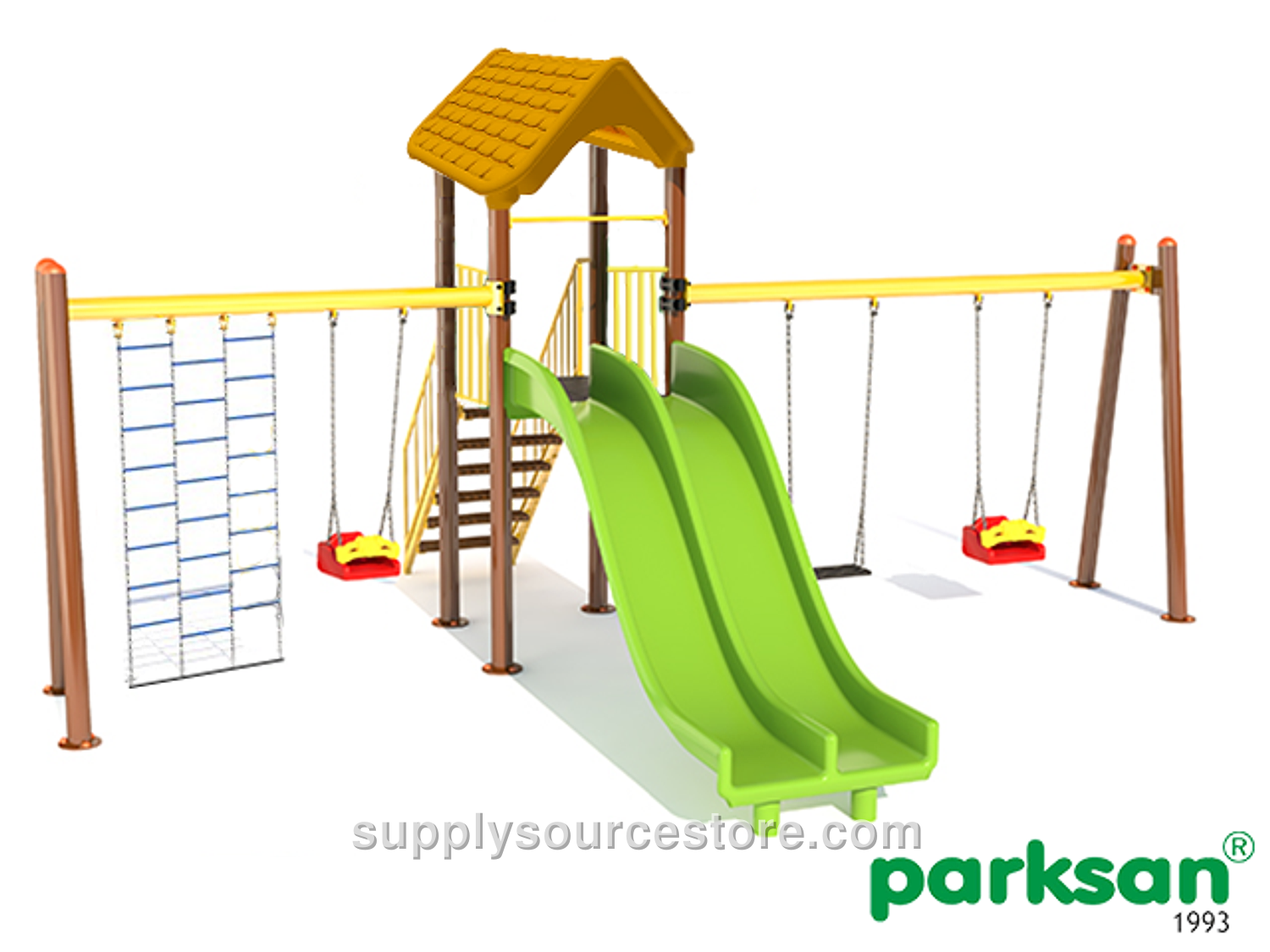
Classic Series Playground
Price on request
SKU: PS-0050304
Product Technical Specifications Seating Area: 740×425 cm (291 x 167 in) Safety Area: 1140×825 cm (449 x 325 in) Slide Connection Height: 150 cm (59.1 in) Age Group: 3+ years Spare Parts: • Polyethylene Roof – 1 pcs • H:150 cm (59.1 in) Polyethylene Double Slide – 1 pcs • 116×116 Composite Platform – 1 pcs • Metal Platform Barrier – 2 pcs • Composite Stair – 1 pcs • H:150 cm (59.1 in) Metal Stair Guardrail – 1 pcs • Swing A Pipe – 4 pcs • Swing Carrier Pipe – 2 pcs • H:150 cm (59.1 in) Tower Pipe – 4 pcs • Rubber‑Coated Swing Seat – 1 pcs • Polyethylene Guarded Swing Seat – 2 pcs • Climbing Chain – 1 pcs Polyethylene Products: Low‑density linear polyethylene (LLDPE) is a thermoplastic used in various products. It is a semi‑permeable, softening, highly durable polymer that is economical and highly resistant, making it popular in industry. Based on density and chemical properties, polyethylene is classified into several categories. Its mechanical properties depend on molecular weight, crystal structure, and branching type. Although properties vary by grade, it generally offers good resistance to outdoor conditions and moisture, flexibility, low mechanical strength, and excellent chemical resistance. Polyethylene is used to manufacture slides, stairs, guardrails, barriers, accessories, roofs, etc. To prevent colour fading, masterbatch dyes used for colouring polyethylene must have a light fastness rating of 6 or higher. The product’s wall thickness must be at least 6 mm (0.2 in) for components subject to pressure and friction, and at least 4 mm (0.2 in) for components used as barriers or shading that are not exposed to pressure. Material distribution must be uniform to achieve consistent thickness. Wall thickness and dimension tolerances are ±5 %. Load‑Bearing Construction: The carrier construction consists of circular‑section steel tubes with a minimum diameter of 114 mm (4.5 in) and a minimum wall thickness of 2 mm (0.1 in), cold‑formed in accordance with TS EN 10219‑2, TS‑6476, DIN 2394 standards, and welded by high‑frequency welding. Tubes are painted by sandblasting followed by a polyester‑based electrostatic powder‑coat. Electrostatic Powder Coating: All metal parts are first sandblasted to remove oil, dirt, and rust, creating a porous surface for better paint adhesion. A fine‑ball coating material is sprayed with compressed air to open pores and clean the metal surface. After manufacturing, metal components are coated with polyester‑based electrostatic powder and cured in an oven at 200‑220 °C for 20 minutes. Subsequently, parts undergo a 10‑minute 70 °C dip in a 5 % degreasing bath, followed by a 15‑minute 50 °C dip in a 1 % iron bath, rinsing, and drying. Finally, the entire product is painted in a single coat to prevent corrosion at welds, using durable polyester‑based powder coating cured at 180‑200 °C for 20‑30 minutes.