Classic Series Children's Playground · SS-012580
Price on request
SKU: SS-012580
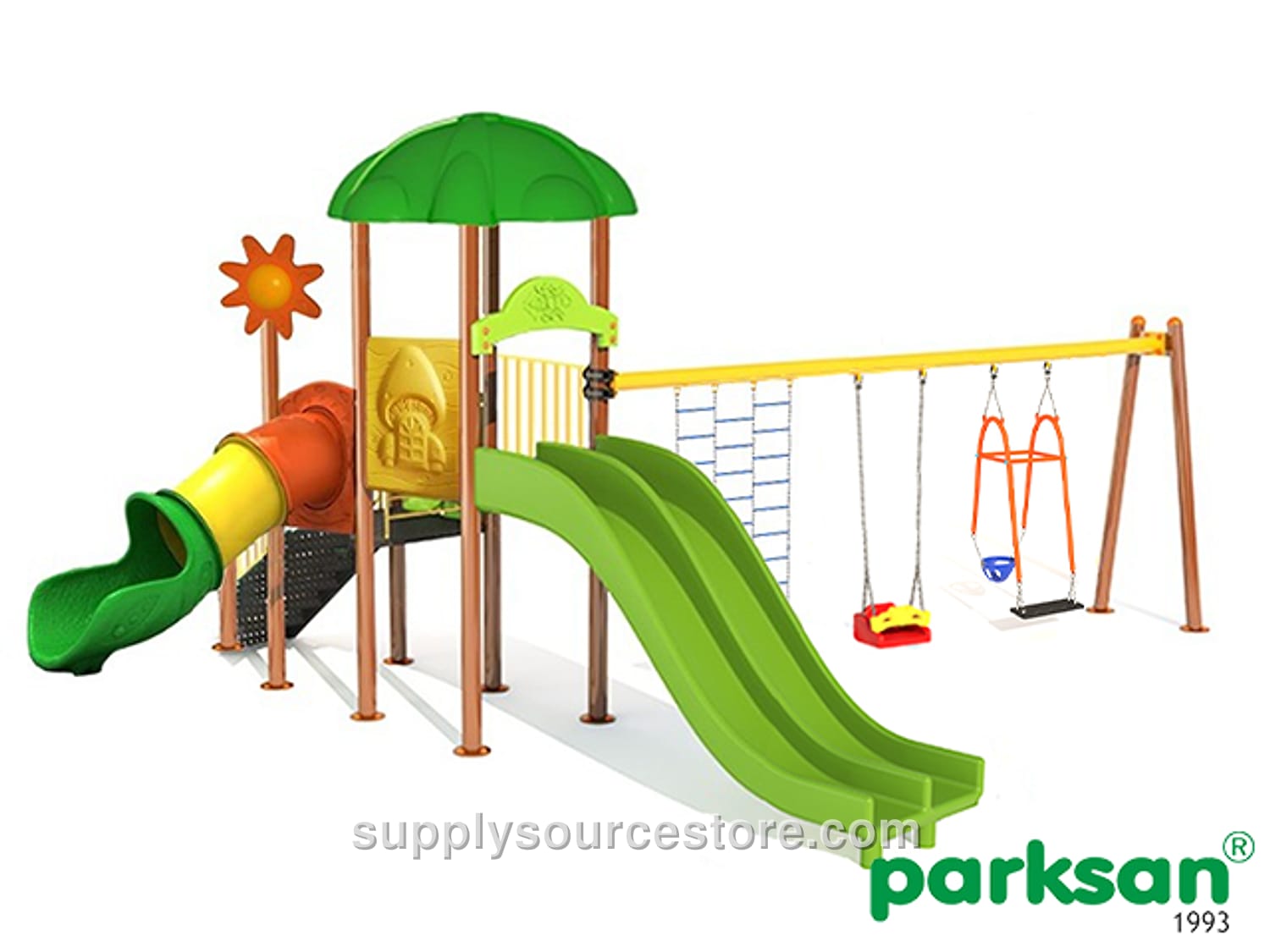
Product Technical Specifications: Seating area: 830 cm (327 in) × 540 cm (213 in). Safety area: 1230 cm (484 in) × 940 cm (370 in). Slide connection height: (not specified). Age group: 3 years and up. Spare parts include: 1 polyethylene roof (height 150 cm (59.1 in)); 1 polyethylene double straight slide (height 100 cm (39.4 in)); 1 tube slide; 2 composite platforms (116 × 116 cm (45.7 x 45.7 in)); 1 polyethylene slide barrier; 1 polyethylene platform barrier; 1 composite stair; 1 stair railing (height 100 cm (39.4 in)); 1 intermediate stair (height 50 cm (19.7 in)); 1 swing‑a‑; 1 swing carrier (height 150 cm (59.1 in)); 4 tower pipes (height 150 cm (59.1 in)); 2 tower pipes (height 100 cm (39.4 in)); 1 rubber‑coated swing seat; 1 infant‑and‑parent swing seat; 1 polyethylene‑guarded swing seat; 1 climbing chain; 1 polyethylene daisy figure. Polyethylene products: Low‑density linear polyethylene (LLDPE) is a thermoplastic used in many of our products. It is semi‑permeable, pliable, and highly durable. Its low cost and high resistance make it a favorite in industry. Polyethylene is classified by density and chemical properties, and its mechanical characteristics depend on molecular weight, crystal structure, and branching. While specific properties vary, it generally offers excellent resistance to outdoor conditions and moisture, flexibility, modest mechanical strength, and superior chemical resistance. Polyethylene is used for slides, stairs, railings, barriers, accessories, roofs, and more. To prevent color fade, masterbatch pigments with a light‑fastness rating of 6 or higher are required. Material thickness must be at least 6 mm (0.2 in) where exposed to pressure or friction, and a minimum of 4 mm (0.2 in) for barrier or shading components that are not pressure‑loaded. Thickness tolerance is ±5 %. Carrier construction: The carrier structure consists of steel tubes with a minimum diameter of 114 mm (4.5 in) and a wall thickness of at least 2 mm (0.1 in), meeting TS EN 10219‑2, TS‑6476, and DIN 2394 standards. Tubes are cold‑formed, welded using high‑frequency welding, and painted with a polyester‑based electrostatic powder coat after sandblasting. Electrostatic powder coating: All metal components are sandblasted to remove oil, dirt, and rust, creating a suitable surface profile for paint adhesion. After cleaning, the parts are coated with a polyester‑based electrostatic powder and cured in a furnace at 200–220 °C for 20 minutes. They then undergo a degreasing bath at 70 °C (5 % solution) for 10 minutes, followed by a pickling bath at 50 °C (1 % solution) for 15 minutes, then rinsing and drying. Finally, the components are powder‑coated again and baked at 180–200 °C for 20–30 minutes. Welded joints are fully painted after welding to prevent corrosion.