Classic Series Children's Playground · SS-012576
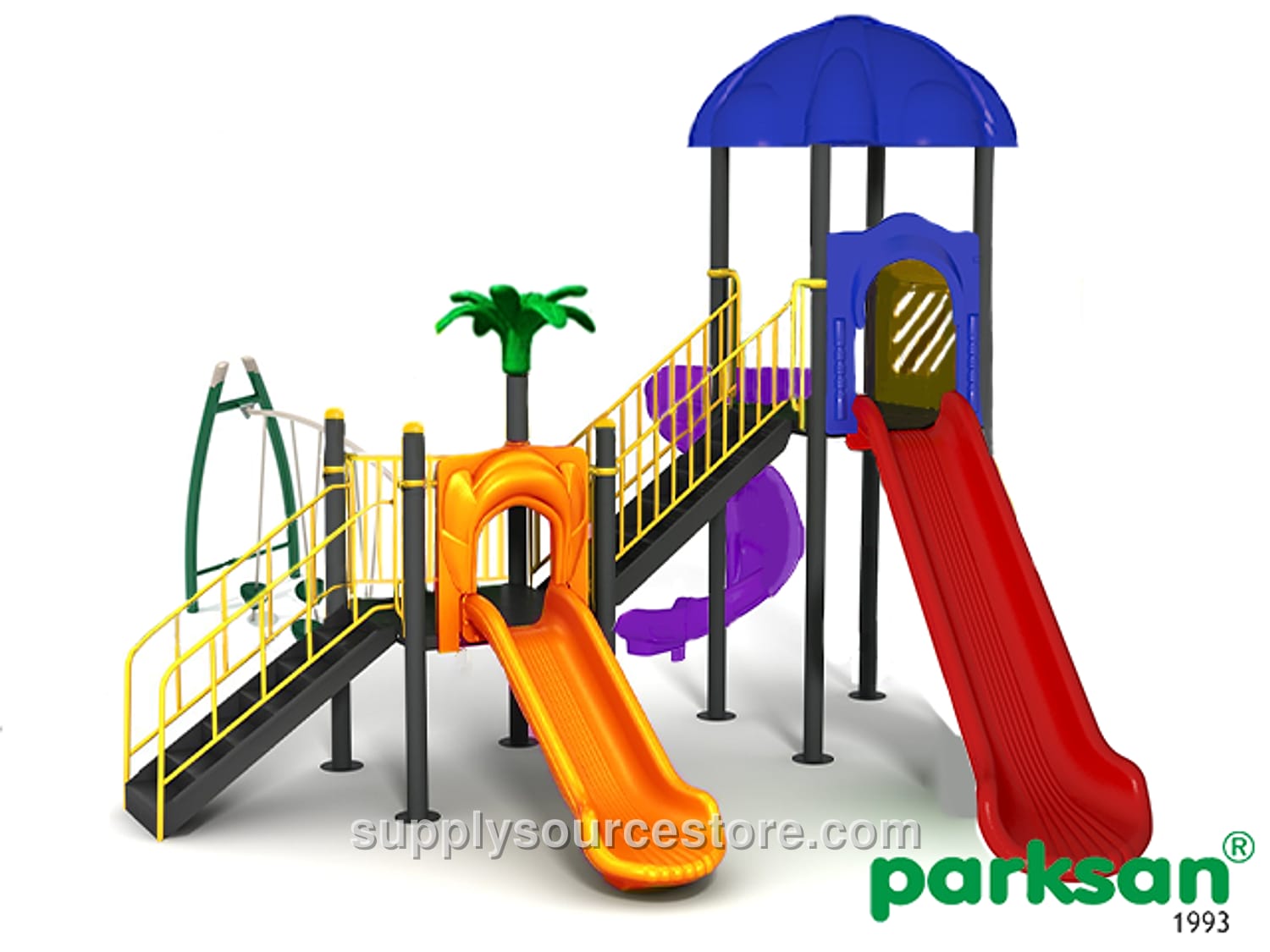
Price on request
SKU: SS-012576
Technical Features: Seating area: 515 × 815 cm (203 x 321 in); safety area: 915 × 1215 cm (360 x 478 in); slide connection height: 100 cm (39.4 in) – 200 cm (78.7 in); age group: 3 + years. Spare parts include: - Polyethylene roof – 1 piece - Straight slide, 100 cm (39.4 in) – 1 piece - Straight slide, 200 cm (78.7 in) – 1 piece - Spiral slide, 200 cm (78.7 in) – 1 piece - Composite platform, 116 × 116 mm (4.6 x 4.6 in) – 2 pieces - Spiral slide extension – 1 piece - Polyethylene slide barrier – 2 pieces - Polyethylene platform barrier – 1 piece - Metal platform barrier – 1 piece - Composite stair – 2 pieces - Metal stair railing – 2 pieces - Tower, 200 cm (78.7 in) – 4 pieces - Tower, 100 cm (39.4 in) – 4 pieces - Balance walkway A – 2 pieces - Balance walkway carrier – 1 piece - Balance walkway polyethylene step carrier with rope – 5 pieces - Polyethylene palmetto figure – 1 piece. Polyethylene products: Linear low‑density polyethylene (LLDPE) is a thermoplastic used in many products. It is semi‑permeable, flexible, and highly durable while offering low cost and high resistance. Based on density and chemical properties, polyethylene is classified into several categories. Its mechanical properties depend on molecular weight, crystalline structure, and branching. Generally it provides good resistance to outdoor conditions and moisture, flexibility, modest mechanical strength, and excellent chemical resistance. Polyethylene is used for slides, stairs, railings, barriers, accessories, roofs, etc. To prevent discoloration, masterbatch pigments used for coloring must have a light‑fastness value of 6 or higher. Minimum wall thickness is 6 mm (0.2 in) for parts under pressure or friction and 4 mm (0.2 in) for barrier or shading components not subjected to load. Thickness tolerance is ±5 %. Carrier construction: Steel tubes with a minimum outer diameter of 114 mm (4.5 in) and a minimum wall thickness of 2 mm (0.1 in), complying with TS EN 10219‑2, TS‑6476, and DIN 2394, are cold‑formed and welded by high‑frequency welding. The tubes are then coated with a polyester‑based electrostatic powder paint after sandblasting to remove oil, dirt, and rust. After painting, the metal components are baked at 200‑220 °C for 20 min. Following fabrication, the parts undergo a 10‑minute dip in a 5 % oil‑removal bath at 70 °C, then a 15‑minute dip in a 1 % iron bath at 50 °C, followed by rinsing and drying. Finally, all metal parts receive a uniform polyester‑based electrostatic powder finish and are cured in ovens at 180‑200 °C for 20‑30 min. Weld seams are painted with a single coat to prevent corrosion.