Classic Series Playground · SS-012573
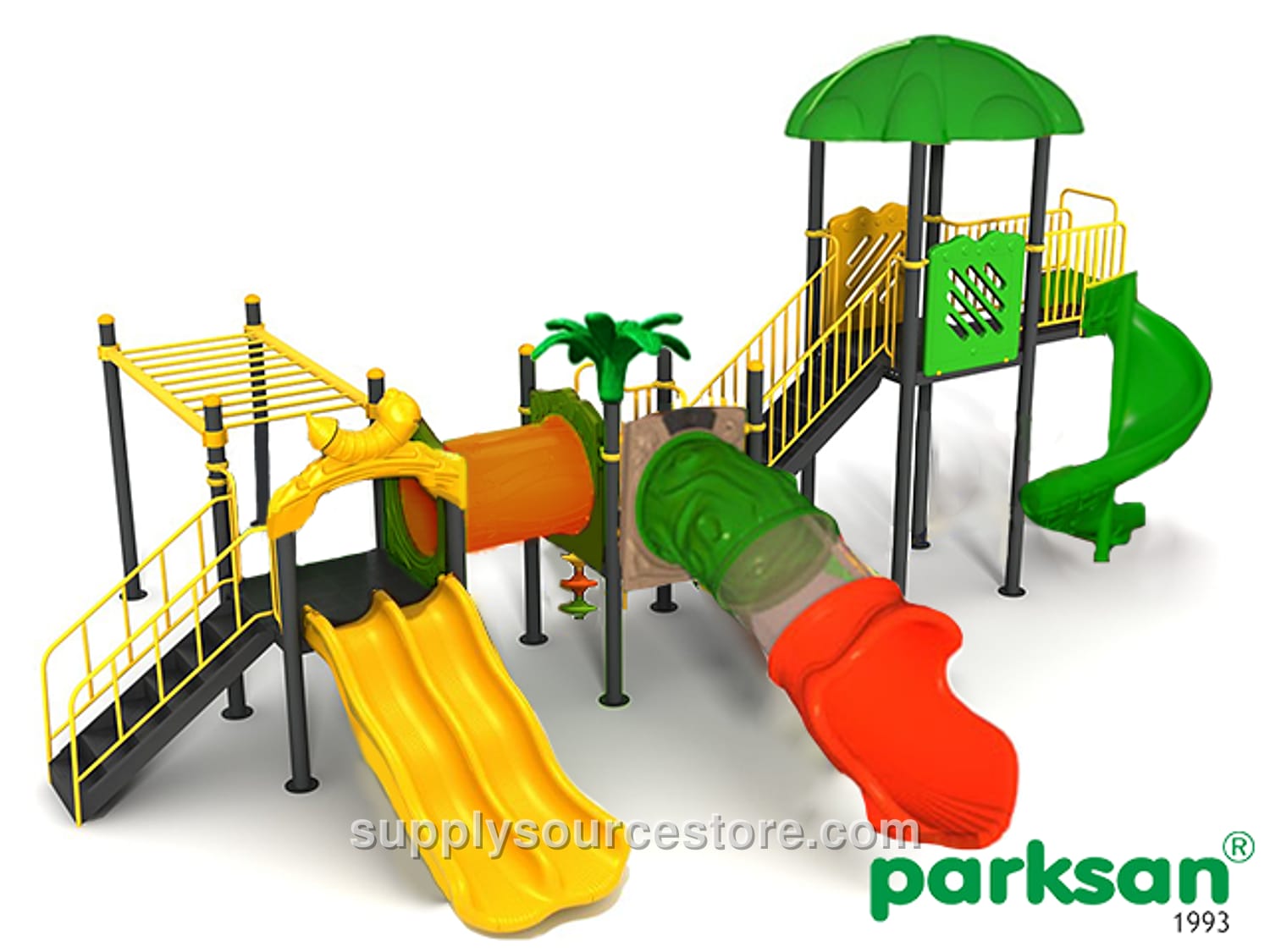
Price on request
SKU: SS-012573
Product Technical Specifications: - Seating area: 530 × 880 cm (209 x 346 in) - Safety area: 930 × 1280 cm (366 x 504 in) - Slide connection heights: 100 cm (39.4 in), 200 cm (78.7 in) - Age group: 3 years and up Spare Parts: - Polyethylene roof – 1 piece - 100 cm (39.4 in) double‑wave slide – 1 piece - 100 cm (39.4 in) tube slide – 1 piece - 200 cm (78.7 in) spiral slide – 1 piece - 116 × 116 cm (45.7 x 45.7 in) composite platform – 3 pieces - Spiral slide extension – 1 piece - Polyethylene slide belt – 1 piece - Polyethylene slide barrier – 2 pieces - Polyethylene platform barrier – 2 pieces - Spiral slide metal platform guard – 1 piece - Composite ladder – 2 pieces - 100 cm (39.4 in) ladder guard – 2 pieces - 200 cm (78.7 in) tower – 4 pieces - 100 cm (39.4 in) tower – 8 pieces - 100 cm (39.4 in) UFO climbing unit – 1 piece - Metal climbing entrance – 1 piece - Pull‑up bar climbing unit – 1 piece - 100 cm (39.4 in) pull‑up bar climbing – 2 pieces - Polyethylene tube passage – 1 piece - Polyethylene tree figure – 1 piece Polyethylene Components: Low‑density linear polyethylene (LLDPE) is a semi‑transparent, flexible, and highly durable thermoplastic. It is low‑cost, provides strong chemical resistance, and performs well in outdoor conditions. Mechanical properties vary with molecular weight, crystal structure, and branching. Across grades, it offers good weather and moisture resistance, flexibility, modest strength, and excellent chemical resistance. Polyethylene is used for slides, ladders, guards, barriers, accessories, roofs, and similar applications. Masterbatch pigments must have a light‑fastness rating of 6 or higher to prevent fading. Minimum wall thickness is 6 mm (0.2 in) for load‑bearing or friction‑exposed parts and 4 mm (0.2 in) for non‑load‑bearing guards and shade structures. Thickness tolerance is ±5 %. Carrier Construction: The frame is fabricated from cold‑formed steel tubes that comply with TS EN 10219‑2, TS‑6476, and DIN 2394 standards, with a minimum outer diameter of 114 mm (4.5 in) and a wall thickness of at least 2 mm (0.1 in). Tubes are sandblasted, then electrostatically coated with a polyester‑based powder paint and baked at 200‑220 °C for 20 minutes. After fabrication, metal parts receive a 10‑minute, 70 °C, 5 % oil‑removal bath, followed by a 15‑minute, 50 °C, 1 % acid dip, then rinsing, drying, and a final cure of the polyester powder coat at 180‑200 °C for 20‑30 minutes to protect welds from corrosion.