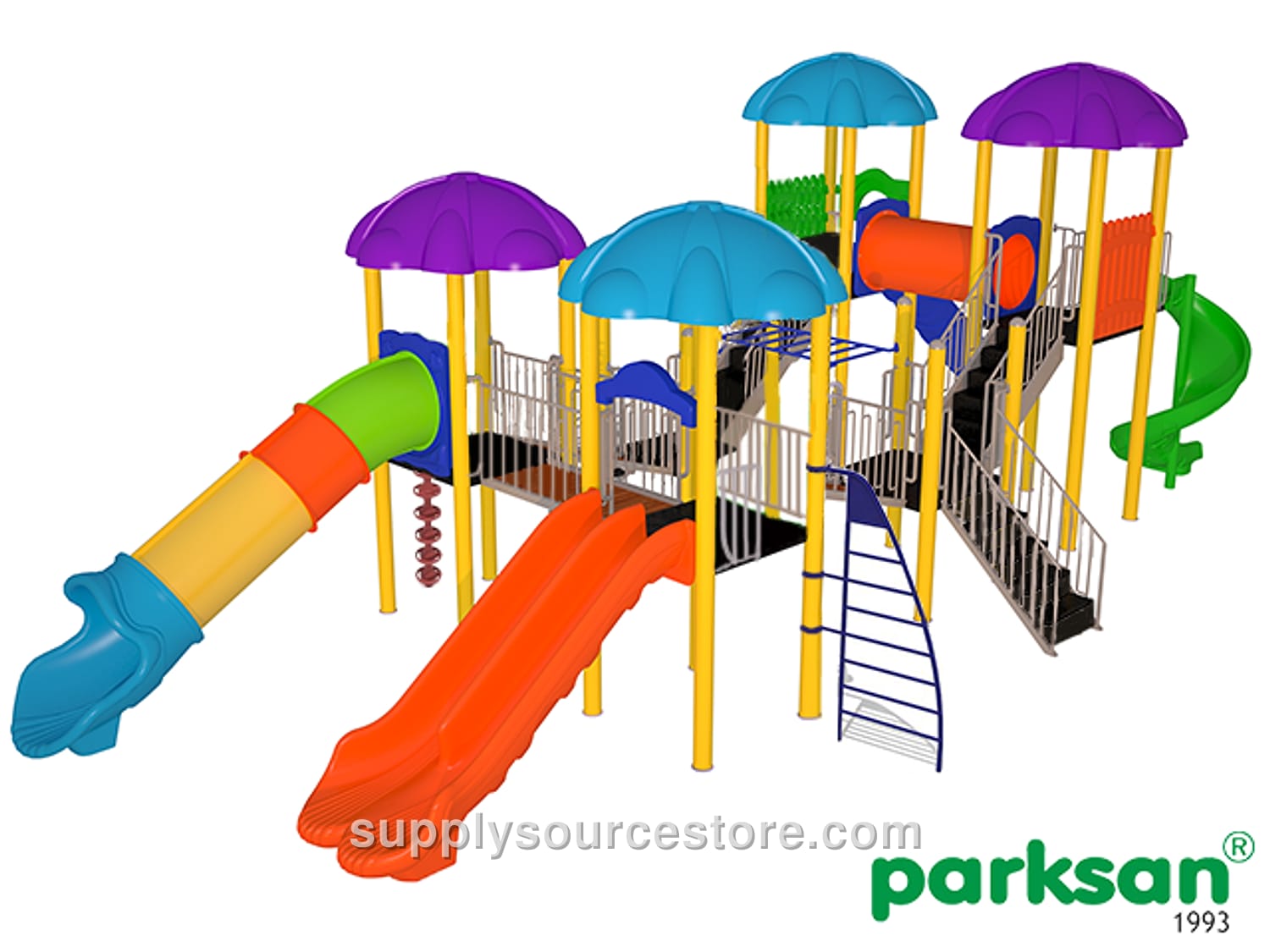
Classic Series Children Playground · SS-012567
Price on request
SKU: SS-012567
Technical Specifications – Seating Area: 525 × 1205 cm (207 x 474 in); Safety Area: 925 × 1605 cm (364 x 632 in); Slide Connection Height: 150 cm (59.1 in) – 200 cm (78.7 in); Age Group: 3 + years. Spare Parts: Polyethylene roof – 4 pcs; 150 cm (59.1 in) double straight slide – 1 pc; 150 cm (59.1 in) tube slide – 1 pc; 200 cm (78.7 in) spiral slide – 1 pc; 200 cm (78.7 in) straight slide – 1 pc; 116 × 116 cm (45.7 x 45.7 in) composite platform – 6 pcs; Bridge platform – 1 pc; Spiral slide extension – 1 pc; Polyethylene slide barrier – 2 pcs; Polyethylene slide belt – 1 pc; Polyethylene platform barrier – 2 pcs; Metal platform barrier – 4 pcs; Metal bridge guardrail – 1 pc; Spiral slide metal platform guardrail – 1 pc; Composite stair – 4 pcs; Stair guardrail – 4 pcs; 200 cm (78.7 in) tower tube – 8 pcs; 150 cm (59.1 in) tower tube – 8 pcs; 100 cm (39.4 in) tower tube – 8 pcs; Polyethylene tube passage – 1 pc; Metal pull‑up bar climbing – 1 pc; 100 cm (39.4 in) UFO climbing – 1 pc; Metal climbing entrance – 2 pcs; Metal climbing element – 1 pc. Polyethylene Products – Low‑density linear polyethylene (LLDPE) is a thermoplastic used in many applications. It is semi‑permeable, flexible, and highly durable, offering low cost and high resistance. Mechanical properties vary with molecular weight, crystal structure, and branching. It provides good outdoor and moisture resistance, flexibility, low mechanical strength, and excellent chemical resistance. Polyethylene is used for slides, stairs, railings, barriers, accessories, roofs, etc. To prevent color fading, masterbatch pigments with a light‑fastness rating of 6 or higher are required. Minimum wall thickness is 6 mm (0.2 in) for pressure‑ or wear‑exposed components and 4 mm (0.2 in) for non‑load‑bearing barriers and shading elements. Thickness tolerance is ±5 %. Carrier Construction – Steel tubes with a minimum diameter of 114 mm (4.5 in) and a wall thickness of at least 2 mm (0.1 in) are cold‑formed according to TS EN 10219‑2, TS‑6476, DIN 2394 and welded by high‑frequency welding. Tubes are sandblasted and powder‑coated with a polyester‑based electrostatic coating. Electrostatic Powder Coating Process – All metal parts are sandblasted to remove oil, dirt, and rust, creating a porous surface for better paint adhesion. After sandblasting, a fine‑ball coating is applied by pressurized air. The coated parts are baked at 200‑220 °C for 20 minutes. Following fabrication, metal components undergo a 10‑minute dip at 70 °C in a 5 % degreasing bath, then a 15‑minute dip at 50 °C in a 1 % iron bath, followed by thorough rinsing and drying. Finally, the entire assembly is painted in a single coat of polyester‑based electrostatic powder and cured at 180‑200 °C for 20‑30 minutes, ensuring welds remain corrosion‑free.