Children’s Playground (Train Series)
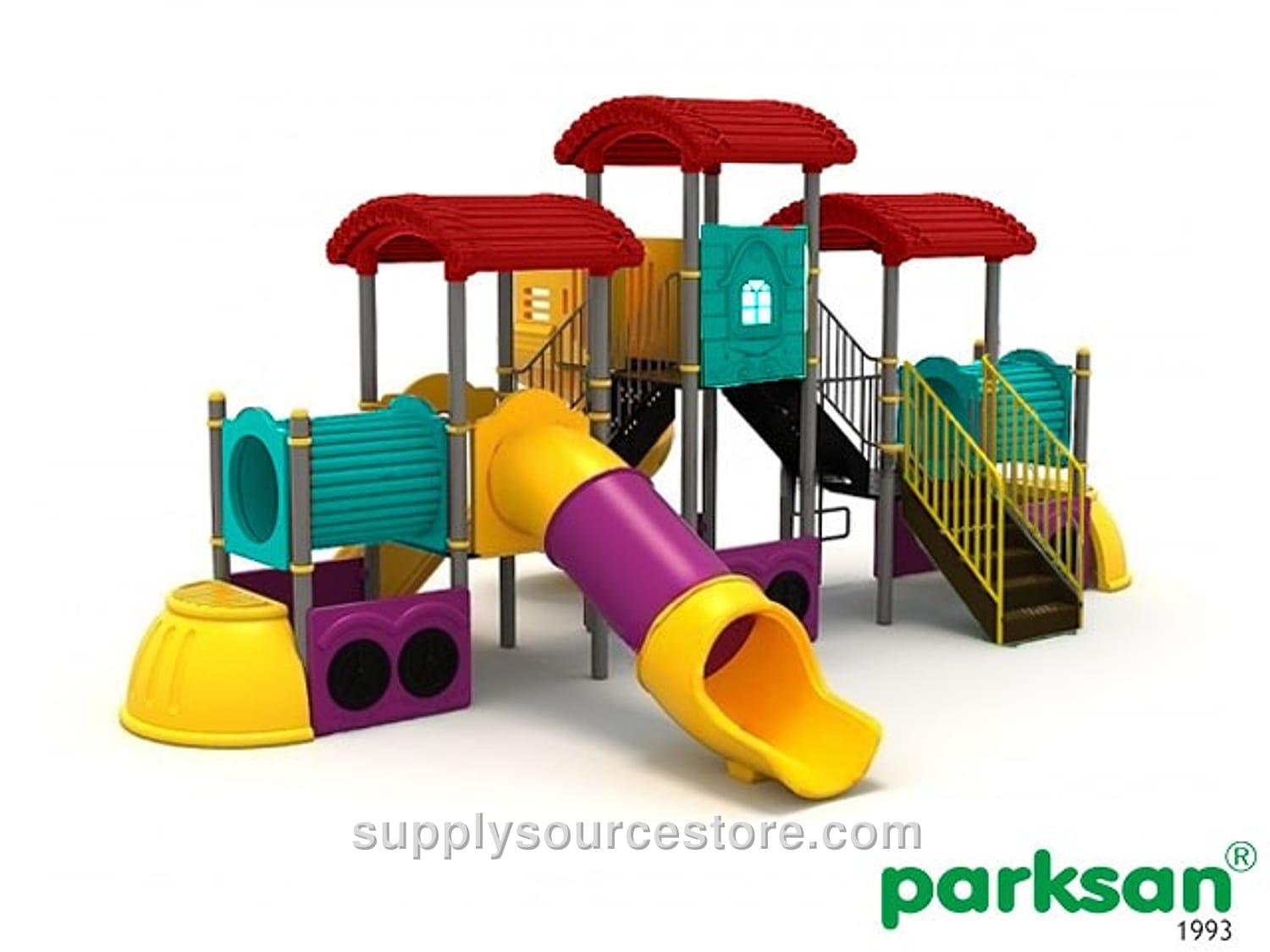
Price on request
SKU: SS-012429
Product Technical Specifications: Age range 3+ years; Capacity 16–18 persons; Height 380 cm (150 in); Safety area 1215 × 905 cm (478 x 356 in). Spare Parts: Polyethylene frame – 2 pcs; Polyethylene train track barrier – 7 pcs; Polyethylene tube connector – 2 pcs; Polyethylene train roof – 3 pcs; Composite stair – 3 pcs; Metal stair guard – 3 pcs; 116 × 116 mm (4.6 x 4.6 in) square composite platform – 3 pcs; Polyethylene slide guard – 1 pc; Polyethylene double straight slide – 1 pc (height 100 cm (39.4 in)); Polyethylene tube slide – 1 pc (height 100 cm (39.4 in)); Polyethylene spiral slide – 1 pc (height 150 cm (59.1 in)); Roofed tower – 8 pcs (height 100 cm (39.4 in)); Roofed tower – 4 pcs (height 150 cm (59.1 in)); Metal climbing element – 1 pc. Polyethylene products: Low‑density linear polyethylene (LLDPE) is a thermoplastic used in many products. It is semi‑permeable, can be softened, and is highly durable. Its low cost and high resistance make it widely preferred in industry. Polyethylene is classified by density and chemical properties; mechanical characteristics depend on molecular weight, crystal structure, and branching. Generally it offers good resistance to outdoor conditions and moisture, flexibility, modest mechanical strength, and excellent chemical resistance. Polyethylene is used for slides, stairs, railings, barriers, accessories, roofs, etc. To prevent color fading, masterbatch pigments must have a light‑fastness rating of 6 or higher. Minimum wall thickness is 6 mm (0.2 in) for parts under pressure and friction, and 4 mm (0.2 in) for non‑load‑bearing barriers or shade structures. Thickness tolerance is ±5 %. Transport construction: Steel tubes with a minimum diameter of 114 mm (4.5 in) and wall thickness of at least 2 mm (0.1 in) are cold‑formed per TS EN 10219‑2, TS‑6476, DIN 2394 and welded by high‑frequency welding. Tubes are sandblasted and powder‑coated with a polyester‑based electrostatic paint. Electrostatic powder coating process: All metal components are sandblasted to remove oil, dirt, and rust, creating a porous surface for better paint adhesion. Fine steel beads are sprayed with compressed air to open micropores and eliminate contaminants. After forming, parts are coated with polyester‑based electrostatic paint and baked at 200–220 °C for 20 minutes. Subsequently, components undergo a 10‑minute soak in a 70 °C bath with 5 % degreasing solution, followed by a 15‑minute dip in a 50 °C bath with 1 % iron phosphate solution. After rinsing and drying, a durable polyester‑based powder coating is applied in an outdoor electrostatic system and cured at 180–200 °C for 20–30 minutes. Weld seams are fully painted after welding to prevent corrosion.