Children's Playground (Afacan Series) · SS-012305
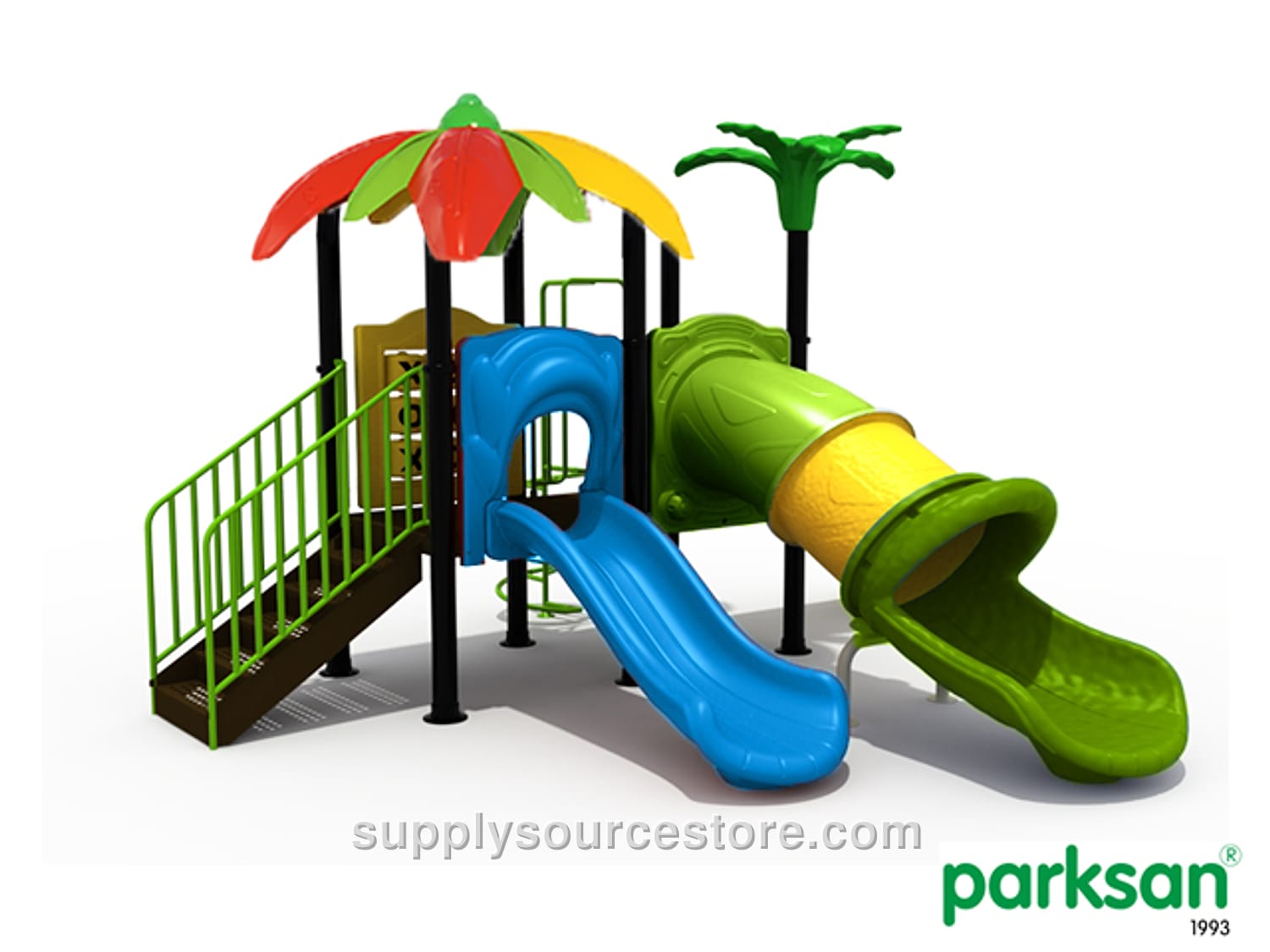
Price on request
SKU: SS-012305
Polyethylene Products – Low‑density or linear low‑density polyethylene (LLDPE) is a thermoplastic used in many applications. It is semi‑permeable, pliable and highly durable, inexpensive and offers high resistance, making it popular in industry. Polyethylene is classified into categories based on density and chemical properties. Mechanical characteristics depend on molecular weight, crystal structure and branching type. While properties vary by type, all polyethylene products generally provide good resistance to outdoor conditions and moisture, flexibility, low mechanical strength and excellent chemical resistance. Uses include slides, stairs, railings, barriers, accessories, roofs and similar structures. To prevent color fading, masterbatch pigments must have a lightfastness rating of 6 or higher. Product wall thickness must be at least 6 mm (0.2 in) for areas subjected to pressure and friction, and at least 4 mm (0.2 in) for barriers and shade structures not exposed to pressure. Material distribution must be uniform, resulting in consistent thickness. Wall‑thickness and dimensional tolerances are ±5 %. Carrier Construction – The carrier framework consists of circular‑section steel tubes that meet TS EN 10219‑2, TS‑6476 and DIN 2394 standards. Tubes are cold‑formed with a minimum outer diameter of 114 mm (4.5 in) and a minimum wall thickness of 2 mm (0.1 in), then welded by high‑frequency resistance welding within standard tolerances. After sandblasting, the tubes are coated with a polyester‑based electrostatic powder‑coat applied in an oven. Electrostatic Powder Coating Process – All metal components are first sandblasted to remove oil, grease and rust, creating a porous surface for better paint adhesion. The coating process includes: 1) blasting to open pores on the metal; 2) spraying the powder coating, which adheres to the prepared surface; 3) curing the coated parts in a furnace at 200‑220 °C for 20 minutes; 4) after fabrication, a 10‑minute soak in a 70 °C, 5 % oil‑removal bath followed by a 15‑minute dip in a 50 °C, 1 % iron bath; 5) final rinsing and drying, then a second cure at 180‑200 °C for 20‑30 minutes. All weld seams are painted continuously to prevent corrosion.