Ship Series Playground
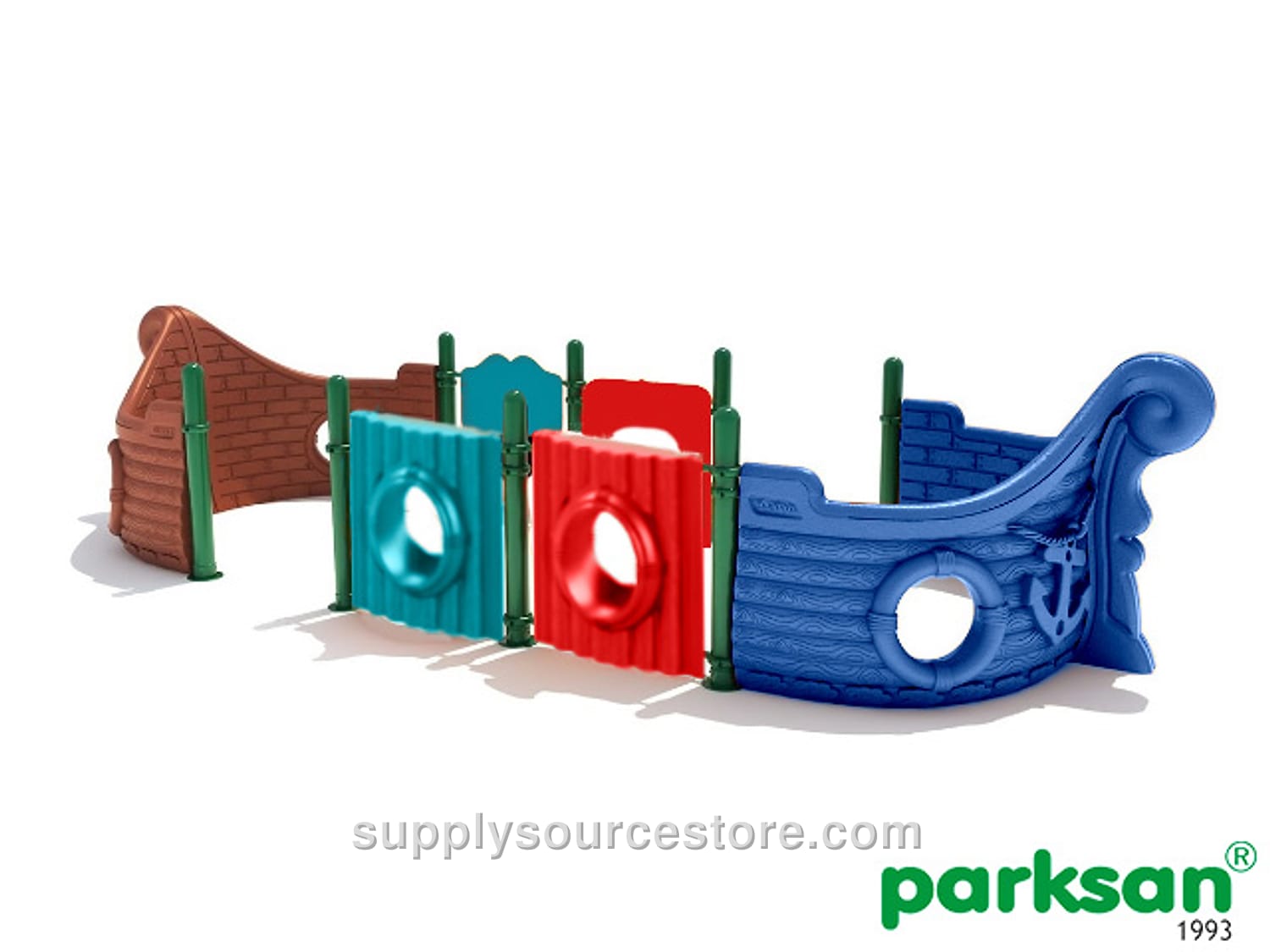
Price on request
SKU: SS-011829
Product Spare Parts • Polyethylene ship nose assembly – 2 ADET • Polyethylene ship – 4 ADET • Ship metal brackets – 8 ADET Polyethylene Products Low‑density linear polyethylene (LLDPE – Linear Low Density Polyethylene) is a thermoplastic used in various products. It is a semi‑permeable, easily softened and highly durable polymer; its low cost and high resistance make it a popular choice in industry. Polyethylene is classified into categories based on density and chemical characteristics. Mechanical properties depend on molecular weight, crystal structure and branching type. While properties vary by grade, overall it offers good resistance to outdoor conditions and moisture, flexibility, low mechanical strength, and excellent chemical resistance. Polyethylene components are used in slides, stairs, handrails, barriers, accessories, roofs, etc. To prevent color fading, masterbatch pigments used for coloring polyethylene must have a lightfastness value of 6 or higher. The product’s wall thickness must be at least 6 mm (0.2 in) in areas exposed to pressure and friction, and a minimum of 4 mm (0.2 in) for components not subjected to pressure such as barriers and shading devices. Material must be evenly distributed to achieve uniform thickness. Wall thickness and dimensional tolerances are ±5 %. Carrier Construction The carrier construction will consist of circular‑section steel tubes formed by cold drawing in compliance with TS EN 10219‑2, TS‑6476, DIN 2394 standards, with a minimum diameter of 114 mm (4.5 in) and a minimum wall thickness of 2 mm (0.1 in). Tubes will be welded with high‑frequency welding and painted with polyester‑based electrostatic powder coating applied by sandblasting. Electrostatic Powder Coating All metal parts will be sandblasted to remove oil, dirt, and rust, creating a porous surface for improved paint adhesion. Fine steel beads will be sprayed with compressed air to open pores and clean the metal surface. After fabrication, metal components will be coated with polyester‑based electrostatic powder and cured in a 200‑220 °C oven for 20 minutes. Subsequently, components will undergo a 10‑minute dip in a 70 °C, 5 % concentration oil‑removal bath, followed by a 15‑minute dip in a 50 °C, 1 % concentration iron bath. After rinsing and drying, the material will be coated with a durable polyester‑based outdoor powder coating and baked at 180‑200 °C for 20‑30 minutes. Welded joints will be painted as a single, continuous coat to prevent corrosion.